Issue No. 309
Ed Tupper
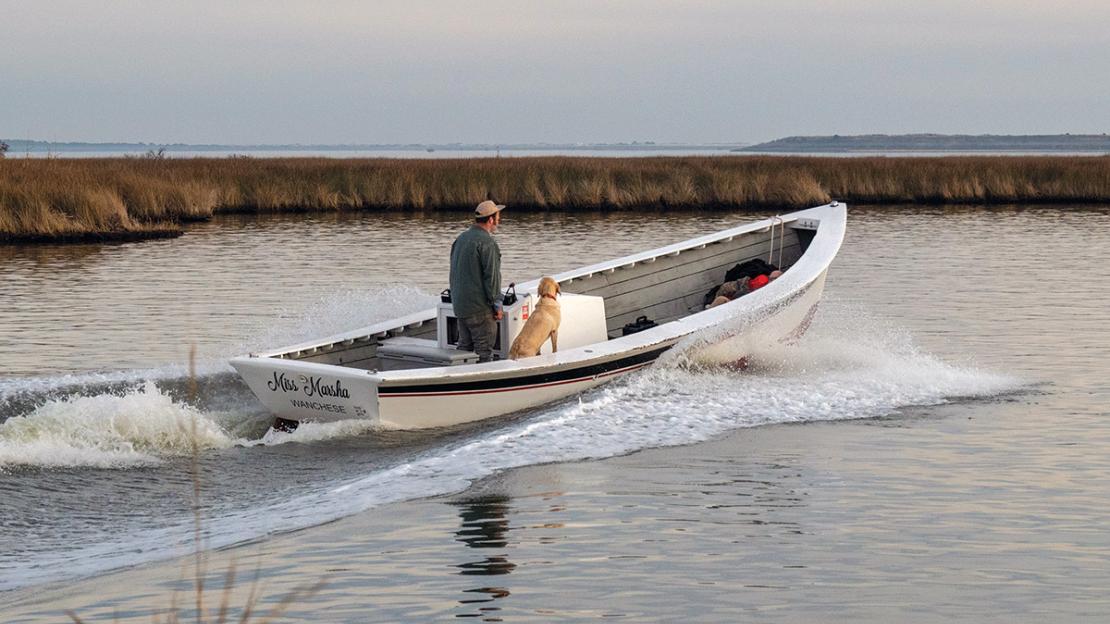
Shad boats, which are the Official State Historic Boat of North Carolina, were first conceived as small sailing vessels after the Civil War and shifted to power in the early 20th century. While their use has diminished, their broad utility as powerful open workboats—and cultural emblems—still attracts passionate watermen.
The North Carolina shad boat is emblematic of the post-Civil War–era South. It embodies innumerable aspects of this period of its region’s historical resource use and development patterns. The changes it has gone through in design, power, and function perfectly mirror a unique slice of Americana.
A shad boat is a utilitarian, carvel-planked workboat built on a carved “bottom piece” as opposed to a standard keel. Usually about 24' long, they were adaptations of earlier dugouts called kunners. The original shad boats of the late 1870s were designed for sail, but later versions were adapted for inboard engines; combined with a shortage of materials such as naturally crooked knees, these powered shad boats began to take on the qualities of a “deadrise” hull type. This evolution has led to some controversy as to whether the later versions are, in fact, shad boats, deadrise shad boats, or round-chined deadrises. Most people on Roanoke Island tend to lean toward a broad definition and embrace all versions as the shad boats that have become an important part of their identity.
George Washington Creef of Wanchese, North Carolina, is credited with designing and building the first shad boat in the late 1870s. Various builders around the tidewaters of Dare County continued to build shad boats and tweak the design for 50 years or more, marking the shift from the age of sail to that of the internal combustion engine, and in 1987 the state legislature designated it the Official State Historic Boat of North Carolina. While shad boats have been employed in many of the state’s tidewater fisheries, they are more than just utilitarian workhorses for artisanal fishermen. Ingrained in their sweeping lines and seakindly forms are myriad influences that go back thousands of years to the Croatoan tribe of the Outer Banks.
Click the button below to log into your Digital Issue Access account.
No digital access? Subscribe or upgrade to a WoodenBoat Digital Subscription and finish reading this article as well as every article we have published for the past 50-years.
To read articles from previous issues, you can purchase the issue at The WoodenBoat Store link below.
 Purchase this issue from
WoodenBoat Store
Purchase this issue from
WoodenBoat Store

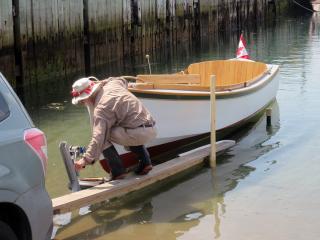
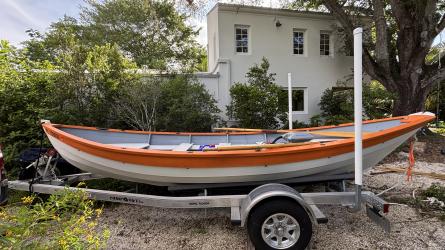
Fantastic, well cared-for boat built by Lowell’s Boat Shop in 2020—perfect for coastal adventures
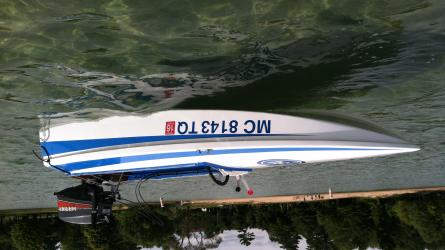
Wood hull built with meticulous and painstaking detail from a kit using a "stich-and-glue" method
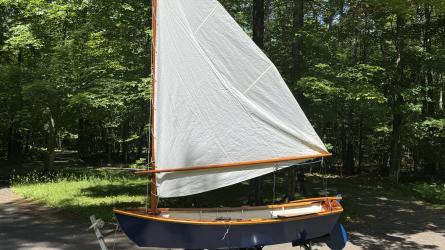
12' wooden sailing/rowing skiff. Owner built in 1985 from King and Davis design.