Issue No. 309
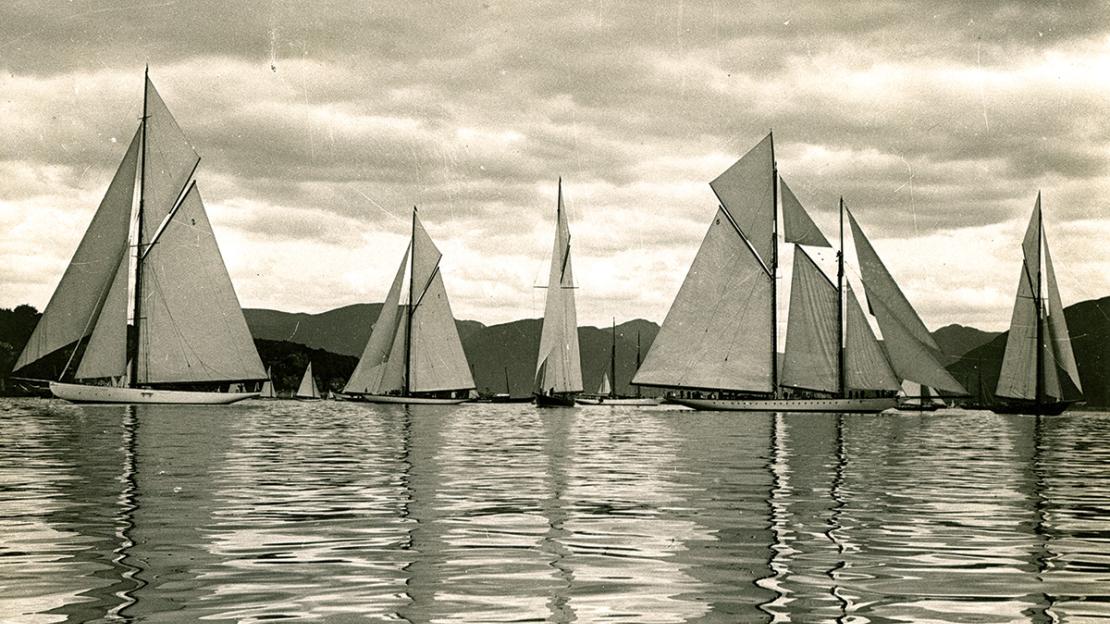
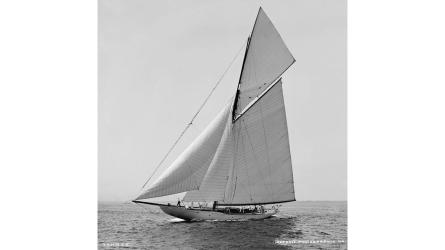
Among recent additions to the collection is the yachting section of the photo library of one of the major Scottish papers. This panoramic photo by George Outram is among the thousands of yet to be cataloged images features a knockout cast: LULWORTH, WHITE HEATHER II, BRITANNIA, WESTWARD, and SHAMROCK—all drifting off Hunter’s Quay in the summer of 1926, waiting for a breeze.
Imagine a bustling light-filled drafting office somewhere in a humming Scottish riverside city in 1903. It’s filled with activity: pencils sharp and ink flying; a balcony for blueprinting a few steps away; the rustle of hundreds of drawings being stamped, revised, shuffled, copied, and studied. There’s a naval architect looking over a draftsman’s shoulder, signing off the exquisitely executed details inked on luminous and translucent starched or waxed linen, copied from penciled drafts on crisp, white, cotton-rag paper.
Blink, and it’s 2025. Now those thousands of precious drawings are cataloged, cleaned, and numbered in neat pencil lettering, stored in pristine (and expensive) oversized flat files, digitally accessible, physically protected by alarms and HVAC systems, surveilled by cameras behind locked doors in a museum vault. What happened in the decades between their heyday and their preservation?
In an ideal scenario, a shipyard or design firm on the brink of closure recognizes the value of its corporate archive, and, if lucky, finds an institution that agrees and has the resources to receive it. Just as often, it can be decades between the active life of a naval architecture or commercial photography repository and its eventual conversion into an accessioned collection—if it happens at all. The transition may take decades. Then, a stressful (but surprisingly common) call might suddenly arrive: “Come today, come now. It all goes to the trash tomorrow!” A scramble ensues, often involving an emergency van rental.
Every curator or archivist has a story of an emergency collections acquisition—of that one time when they climbed into a dumpster or delicately picked around animal carcasses or went, fully masked and suited up, into a recently flooded basement. And no matter how a collection arrives at an archive’s doorstep, that’s just the beginning. Next come the months or years of physical labor and resources required to process and conserve it for the public access.
Click the button below to log into your Digital Issue Access account.
No digital access? Subscribe or upgrade to a WoodenBoat Digital Subscription and finish reading this article as well as every article we have published for the past 50-years.
To read articles from previous issues, you can purchase the issue at The WoodenBoat Store link below.
 Purchase this issue from
WoodenBoat Store
Purchase this issue from
WoodenBoat Store

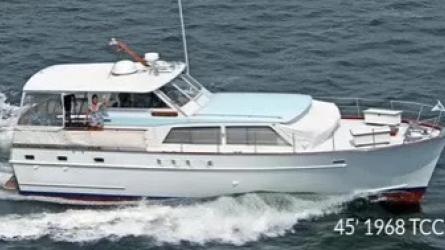
Located in Mystic, Connecticut - 3 staterooms and salon with A/C units, sleeps 8 - well maintaine
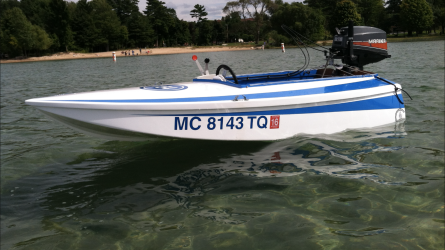
Wood hull built with meticulous and painstaking detail from a kit using a "stich-and-glue" method